Even we were surprised by the wide range of Bavarian-style wheat beers available in domestic retail. Almost every discount chain carries their own brands, and of course there are international brands too. We conducted a blind test to find out which one is the best value for money.
When it comes to wheat beers, two types typically come to mind first: Belgian witbier and the perhaps even better-known Bavarian wheat beer. The latter is considered so important by the trade that, in addition to light and brown lagers, they also try to offer their own brands, making sure that there is something to choose from in the lower and middle price categories.
Bavarian wheat beer is typically refreshing, highly carbonated, with a characteristically rich head, and its banana and clove aromas are usually emphasized. The BJCP summarizes the style traits as follows: in the best German wheat beers, the balance of esters and phenols is decisive. In addition, it is characterized by a moderate wheat aroma (bready, cereal character), "not necessary, but acceptable, a light, citrusy bitter aroma, low to moderate vanilla aroma and/or a slight bubblegum aroma. None of these should be strong, dominant, but they often add to the complexity and balance of the beer".
Well, these are what we were looking for in the blind test we organized at Murok Café, in which ten Bavarian wheat beers participated. Specifically, these are:
Adelskronen Hefe-Weissbier (Penny)
Apostel Weissbier
Edelweiss Hefetrüb
Erdinger Weißbier
HB Münchner Weisse
Karlskrone Weissbier (Aldi)
Paulaner Weissbier
Pécsi Sör Prémium Büza
Perlenbacher Hefe-Weissbier (Lidl)
Rastinger Weizen (Tesco)
The beers were poured into the glasses at the ideal drinking temperature (8-10 °C), and the testers naturally did not know exactly which beers were in the line, we only determined the style. We used the BJCP system during the evaluation.
After the points were tallied, there were quite a few surprises. Rastinger Weizen, Tesco's own-brand Bavarian wheat beer, came in third place on the imaginary podium. A five percent, unfiltered wheat beer, with a clear estery, banana aroma, a slight bubblegum-date line, balanced, although not very full-bodied. The latter means that we can only speak of a little length of taste, but in return it is refreshing and round. Unfortunately, the can does not reveal where it comes from, it is possible that Tesco has it manufactured in more than one place.
In second place was Paulaner Weissbier, straight from Munich. Paulaner advertises itself as Germany's number one wheat beer, citing 2020 Nielsen data. The strongest beer in the field (5.5 percent) swept us off our feet with its beautiful creaminess. Super estery, but not ostentatious. A very substantial, balanced, restrainedly elegant beer, with a body to teach.
And two products also took the top spot – due to a tie for points. One is the Austrian classic, Edelweiss Hefetrüb. This 5.3 percent beer was the most intensely “varietal” in the field with its distinct esteriness and incredible banana aroma. It is accompanied by a slightly orange peel and Donald chewing gum aroma, all of which are reflected nicely in the taste. It is a shade lighter than the others and the carbonation is great, which balances its sweetness well. It is imported from Austria by Heineken Hungária. It is one of the most expensive beers in the field, but it is worth the price.
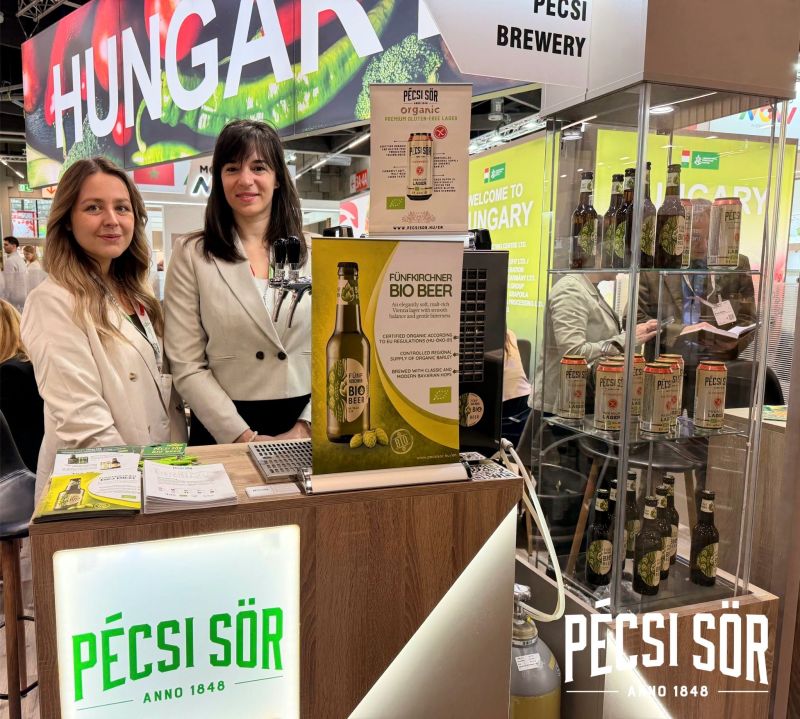
The other first place winner – to our surprise – was Pécsi Sör Prémium Búza. The 5 percent beer – like other Pécsi beers – is advertised on the box as being made with open vat fermentation. Well, according to many, this doesn’t go well with all beers, but it seems to be a great match for wheat. It has more spicy (clove) notes than banana, and it also has a nice milk caramel, fruit bread feeling. A well-structured, balanced beer that deserves recognition!